Research Interests
My investigations are centered upon nonlinear continuum mechanics, finite deformation kinematics, constitutive modeling, and experimentally informed damage characterization of advanced fiber-reinforced laminated composite systems. The principal emphasis of my research lies in the formulation of rigorous multiscale frameworks capable of describing complex deformation processes, constituent-level damage evolution, and geometric incompatibilities arising in composite materials subjected to finite strain regimes.
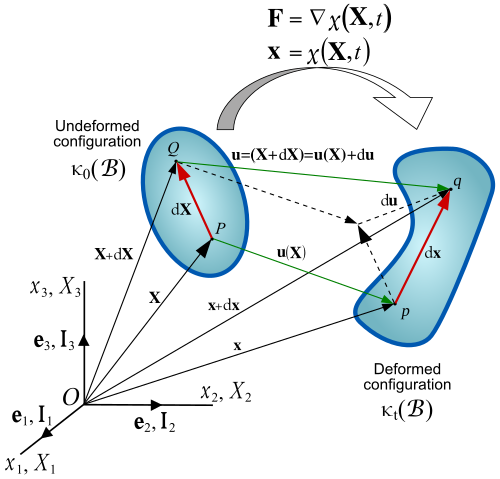
Core Themes of My Research
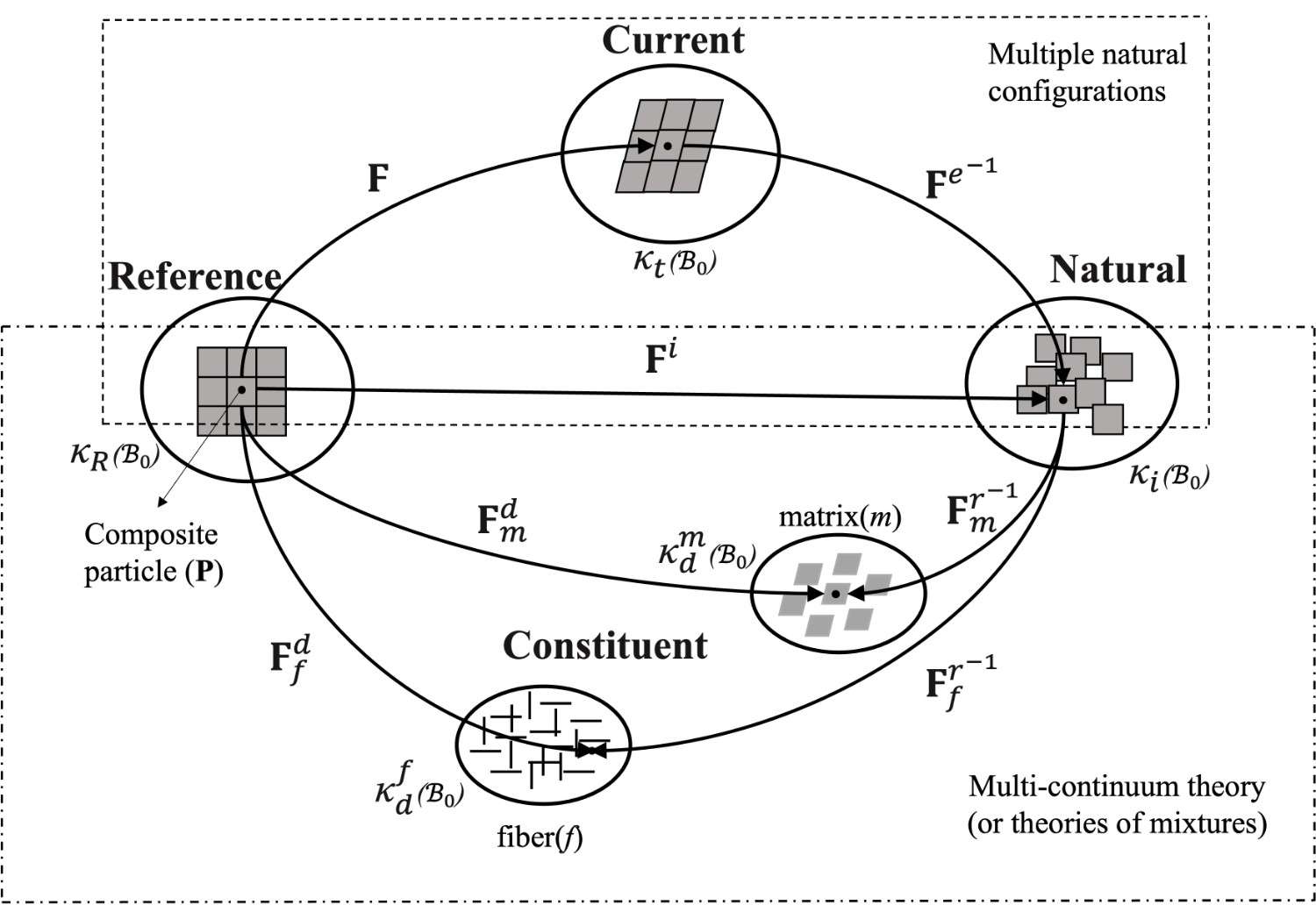
Finite Deformation Mechanics
My work employs a novel kinematic framework for fiber-reinforced composite materials. For this purpose, we use the theory of multiple natural configurations (Rajagopal and Srinivasa, 1998, International Journal of Plasticity, 14, 969-995) in conjunction with the multi-continuum theory (Bedford and Stern, 1972, Acta Mechanica, 14 (2), 85-102) keeping the underlying physics consistent.
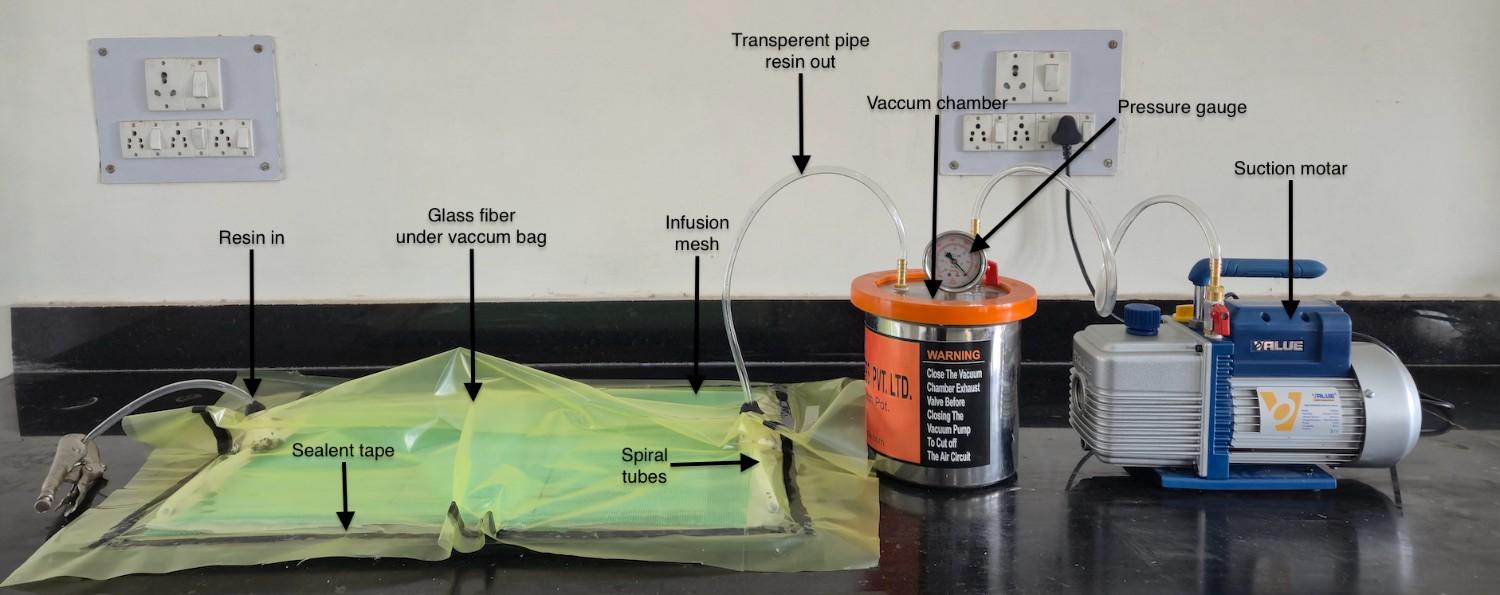
Composite Materials
Depending on their specific constituents, the damage mechanisms of laminated composites may widely vary. For example, composite materials made up of glass or carbon fibers and a resin-based matrix, which are widely used in civil engineering or aerospace applications, are stiff in nature. These composites show brittle failure and cannot sustain large deformation. On the other hand, fiber-reinforced composites that constitute soft matrices such as elastomers or rubbery materials can undergo large deformations without failure due to the specific mechanical properties of their constituents as well as their damage mechanisms.
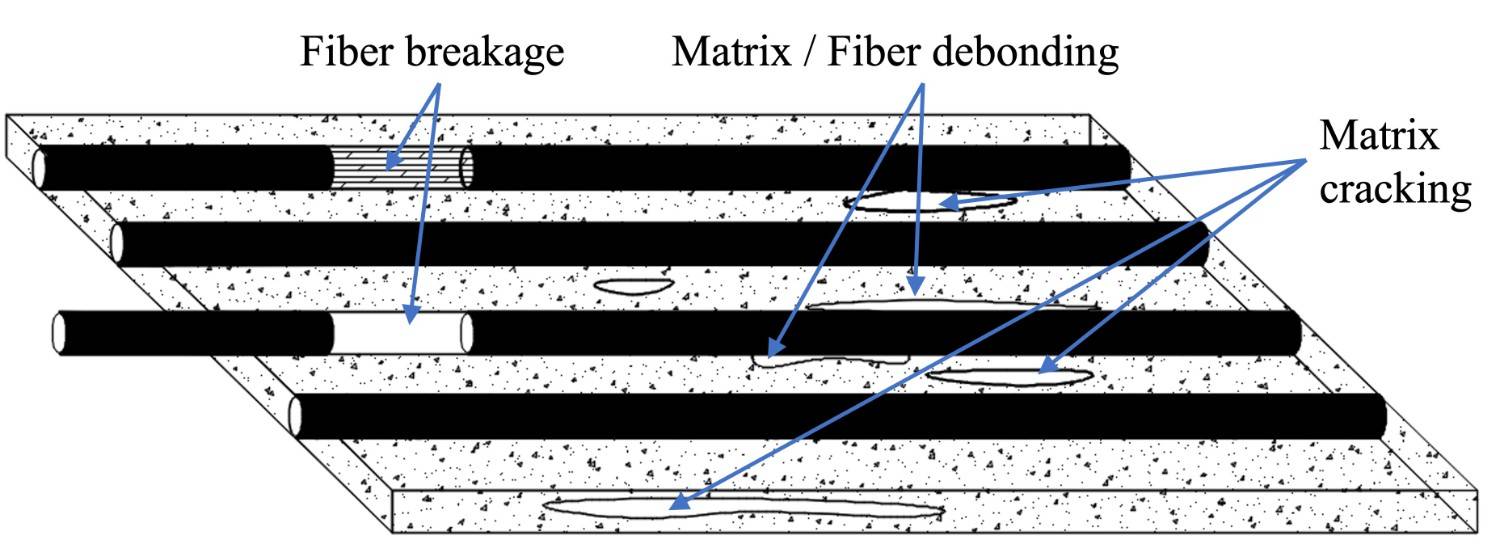
Damage Mechanics
Damage evolution is characterized through matrix cracking, fiber breakage, interfacial slip, debonding, and delamination.
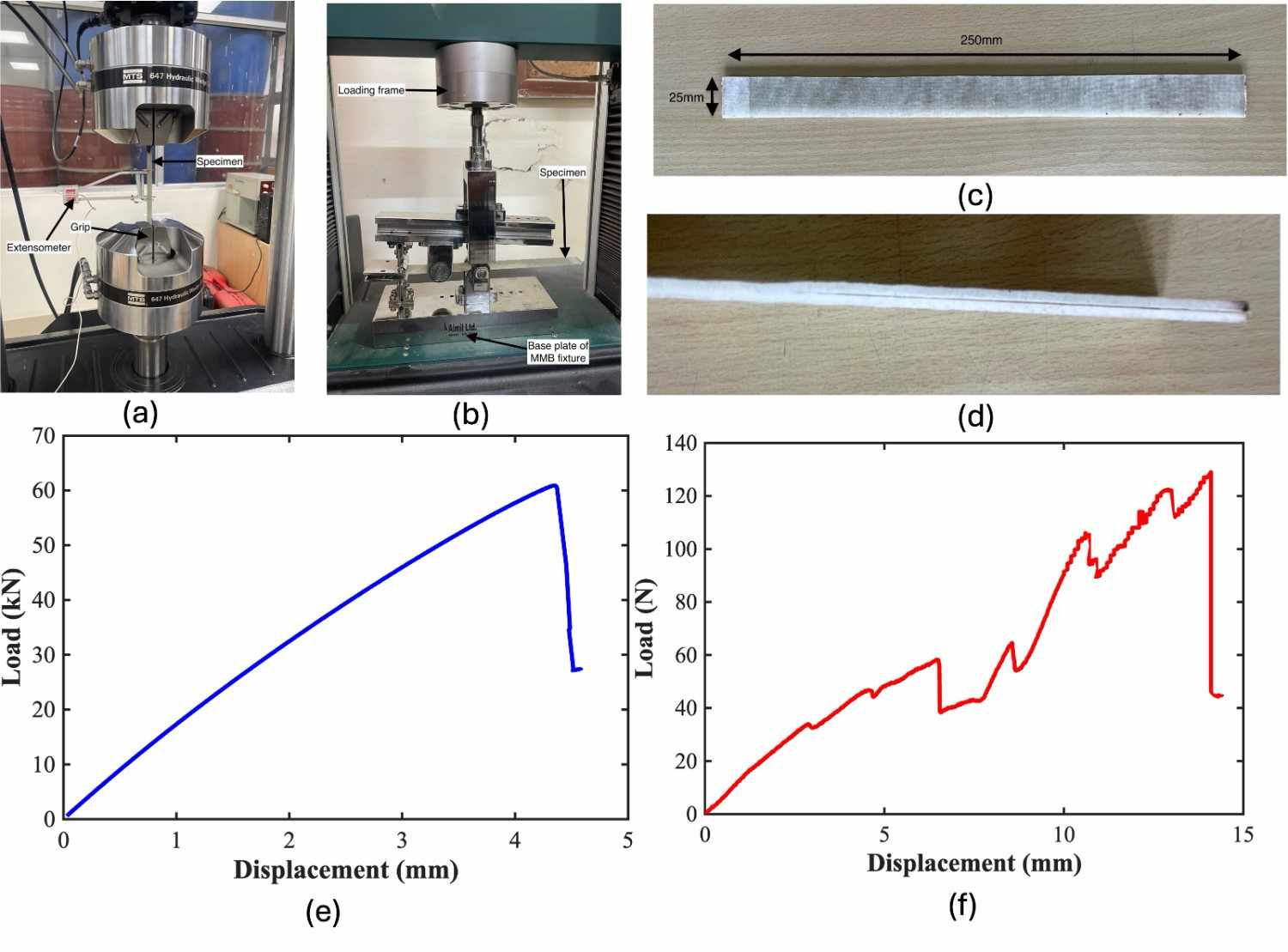
Experimental Investigation
Experimental studies involve tensile testing, mixed-mode bending experiments, and progressive damage characterization.
Damage Characterization
The mechanical damage in composite materials is distinct from that of single-phase materials owing to the different damage mechanisms that these materials exhibit. The primary damage mechanisms considered here are fiber breakage, matrix cracking, interfacial debonding, and delamination.
Matrix Cracking
Matrix crack density tensor representing incompatibility associated with matrix damage evolution.
Fiber Breakage
Fiber breakage mechanisms characterized through fiber incompatibility tensors.
Interfacial Slip & Debonding
Relative constituent motion governs interface slip, debonding, and constituent separation mechanisms.
Delamination
Delamination is represented through displacement discontinuity measures across the interface manifold.
Geometric Interpretation of Damage
Differential geometric tools are employed to establish rigorous incompatibility interpretations associated with matrix cracking, fiber breakage, interfacial slip, and delamination in composite systems.
Matrix Configuration
The torsion tensor associated with the matrix natural configuration provides the geometric incompatibility corresponding to matrix crack.
Fiber Configuration
Fiber breakage induces torsion within the fiber natural configuration and acts as a geometric measure of incompatibility.
Debonding and Interfacial Slip
Interface incompatibility describes the geometric discontinuity associated with interfacial damage, debonding, and delamination evolution.
Delamination
The total torsion field combines bulk and interface incompatibility contributions corresponding to delamination-induced geometric defects.
Research Activities
Completed DST-SERB Project
Assessment and modeling of damage in fiber reinforced laminated composites.
Current Work
Current investigations focus on microfiber buckling and nonlinear instability mechanisms.
Collaboration
Open for collaboration in continuum mechanics, finite deformation, and composite materials.